
SK-12 seal kits short for week 40.
40 on hand · Lines 1, 2 and 4 need 75
Solutions · Supply Chain & Planning
Three lines want the last 40 units.Nobody wrote down who got them.
Shortage allocations, PO changes and expedites are decided in escalation calls, and the planning system only ever sees the outcome. Unifize keeps the options, the criteria and the commitments on the record behind every call.
Shortfall raised against open demand
Runs wherever supply is tight
Every commit point, on the record.
The supply work planners and buyers actually run, as governed decisions: the options, the criteria and who agreed, next to the plan they change.
Shortages and commitments
Who gets the parts, what the plant can promise, and what is held while it is decided.
- Shortage and Expedite Management
- Capacity Planning and Commitment
- Warehouse and Inventory Hold/Release
Purchase orders
Orders released to qualified suppliers, and every change to them agreed on both sides.
- Purchase Order Approval and Release
- Purchase Order Change Management
End of life and service
Last-time buys, service parts and the installed base through the support window.
- Product Lifecycle and Obsolescence Management
- Service Parts and Replacement Supply Chain
- Installed Base and Product Discontinuation
The plan shows the outcome. Never the call.
The failure modes we see inside supply chain and planning. None of them is a missing feature. All of them are decisions made in a meeting that never reached the record.
- Shortage decisions live in meeting notes, not the planning systemThe plan shows the outcome, not the trade-off.
- Supply disruption response runs in a war-room chat threadFast in the moment. Gone three months later.
- PO change approvals scattered between sourcing and qualitySourcing approves one version. Quality approves another.
- Expedite escalations bypass the schedule of recordThe customer is served. The master schedule drifts.
The same allocation argued again at the next shortage. That re-argument is the coordination tax.
Measure your coordination tax →Make the allocation where it can be read later.
Most planning systems record the plan after the call. Unifize holds the call itself: the shortfall, the options, the criteria, who approved and which customers were told.
Your plan stays in the ERP. The decisions run here.
Unifize does not replace your planning system. The work orders and supplier records these decisions touch run on two products, on the same record as the call.
- Explore the product →
Manufacturing Execution System
The work orders an allocation moves, rescheduled on the record.
- Explore the product →
Quality Management System
The supplier's status and corrective actions behind every PO and alternate.
It sits beside the plan you already run.
Keep the ERP and planning tools that hold demand, supply and the schedule. The shortage calls, PO changes and expedites that move them run on Unifize, with who decided and why.
Proof, to the standard you'd hold us to.
A signed baseline, plus the teams who moved their decisions onto one record, in their own words.
- Customer-attested · medical devices41%lower non-conformance coordination cost, measured in year oneMedical-device manufacturer$81,350 a year recovered against a signed $198,150 baselineSigned baseline, anonymized
 Erica BennermanNutritional SupplementsUrgent shipments get a release answer within 15 minutes
 Mikala HukkaNutritional SupplementsQuarantine holds cut from a month to hours, no back orders
 Biovation LabsJesse Kolstad, Director of QualityEmailed lot releases once held shipping to the next week
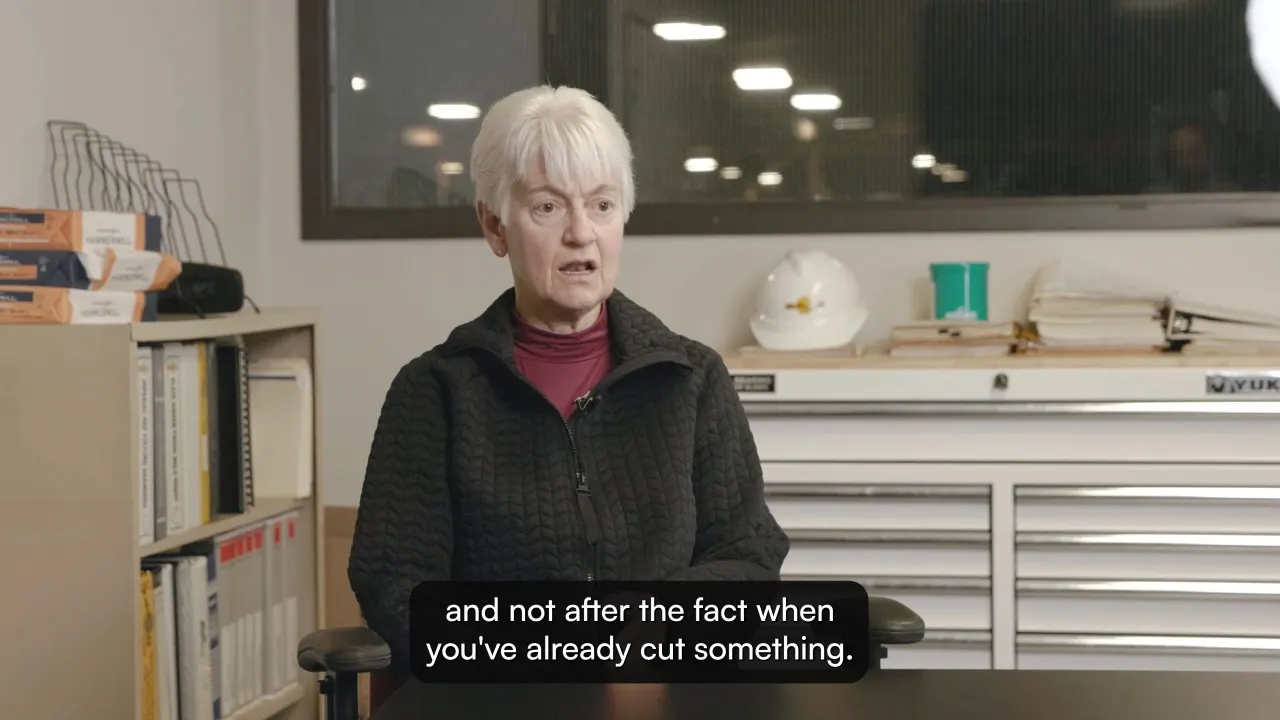 Carol WilsonConstructionWrong material coming in alerts accounting to stop payment
 The Will-Burt CompanyTedd Carr, Director of Quality ControlTasks that took weeks or months now close in days
When supply breaks.
Each of these starts a clock, and each routes into a governed decision, so the call is made on the record it will be judged by.
Shortage-driven line stop
Routes to Work Order Management · owned by Planning · Operations · Procurement
Expedite spiral
Routes to Supplier Quality · Work Order Management · owned by Procurement · Planning
Supplier-caused line stop
Routes to Supplier Quality · owned by Procurement · Supplier Quality · Manufacturing

Allocate it. Keep the reason.
Bring one real shortage, a stuck PO change or an expedite spiral, and see it run on your own work in a 30-minute walkthrough.