
Opened gate 3, design freeze, for the pump housing.
Exit criteria from the program plan · review Thursday
Solutions · New Product Development
The gate passed on a deck.Launch slipped anyway.
Gate evidence is rebuilt for every review and approvals live in email and meeting notes, so gates recycle and launches slip. Unifize holds each gate's criteria, evidence and decision on the record, from concept to release.
Gate opened with its exit criteria
Runs wherever launches are gated
From concept to launch, the design history intact.
The development work R&D, quality, operations and suppliers run together, as governed decisions: each gate's criteria, the evidence behind it and who passed it, on the record the auditor will read.
Concept to design freeze
Prototypes, handoffs and the gate that freezes the design.
- Prototyping and Concept Development
- Concurrent Engineering Handoff
- Design for Manufacturing
- Design Freeze and Release to Manufacture
Risk and validation
What could fail, what controls it, and proof the process holds.
- Product Risk Management
- FMEA and Design/Process Risk Analysis
- Validation and Qualification
Transfer and launch
The product, its evidence and its process, handed to manufacturing and the market.
- Design Transfer and Product Launch
- Technology Transfer Governance
- PPAP and APQP
- Clinical and Pre-Market Evidence Management
The gate review moved again. So did the launch.
The failure modes we see inside product development. None of them is a missing feature. All of them are gate decisions made without the evidence on the record.
- Specifications locked before supplier capability is verifiedThe spec freezes at the gate. The supplier finds out at inspection.
- APQP gate review evidence rebuilt at each phaseThe same evidence, re-explained at every gate.
- Validation runs cannot be reproduced from the record aloneThe report exists. The conditions behind it do not.
- PPAP submissions assembled from scratch each programmeEvery program rebuilds the part-approval package by hand.
Gates recycled, launches slipped, the history file rebuilt at audit. That rework is the coordination tax.
Measure your coordination tax →Pass the gate on evidence, not on a deck.
Most development tools track tasks and files. Unifize holds the gate itself: its exit criteria, the evidence bound to each one, the supplier's capability confirmed before the spec locks, and the signed decision.
One product holds the design history.
Specifications, design controls, risk, FMEA and inspection parameters live in Product Lifecycle Management, on the same record as every gate.
Runs in
Product Lifecycle Management
The product record every gate reads: specs, design controls, risk and FMEA.
Explore the product →It sits beside the tools engineering already uses.
Keep the CAD and PDM tools that hold your models and the ERP that holds the released BoM. The gates, the evidence behind them and the design history run on Unifize, approved with a 21 CFR Part 11 signature.
Proof, to the standard you'd hold us to.
A signed baseline, plus the teams who run product development on Unifize, in their own words.
- Customer-attested · medical devices41%lower non-conformance coordination cost, measured in year oneMedical-device manufacturer$81,350 a year recovered against a signed $198,150 baselineSigned baseline, anonymized
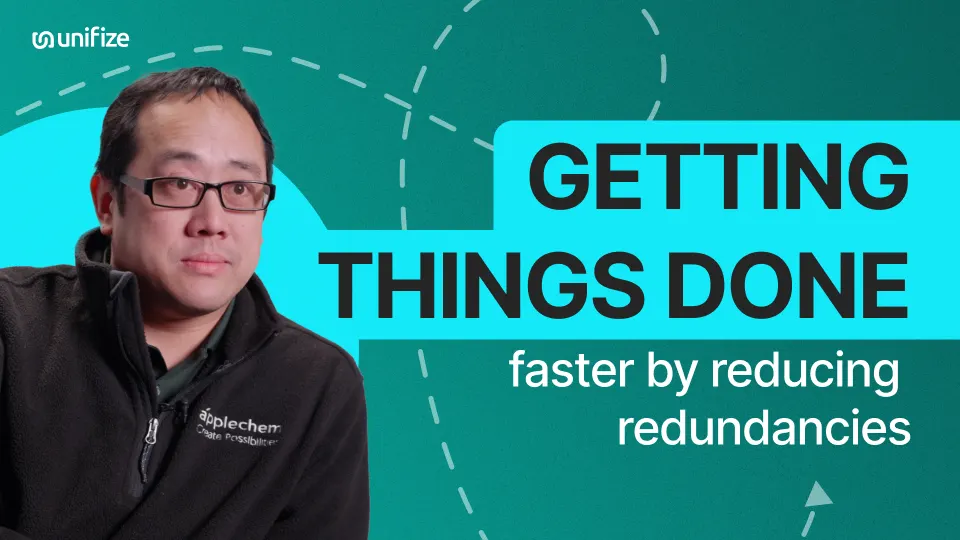 ApplechemWilson Lin90% of repeated NPD discussion eliminated
 Natalie JonesNutritional SupplementsAn ingredient reviewed once is never re-reviewed
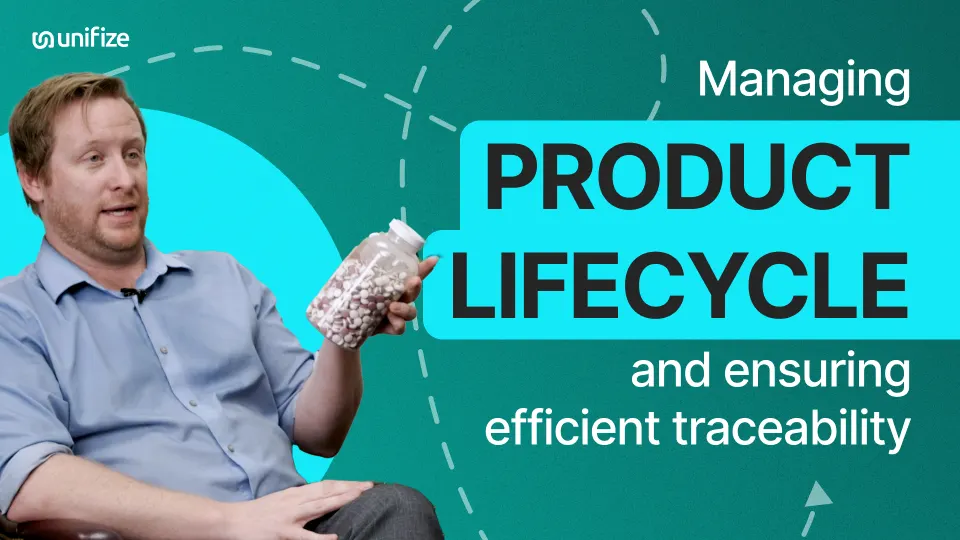 Biovation LabsJesse Kolstad, Director of QualityIngredients, formula and artwork worked in parallel
 Harmonic BionicsMichael Hogan, Mechanical EngineerA design update no longer waits two weeks for a reply
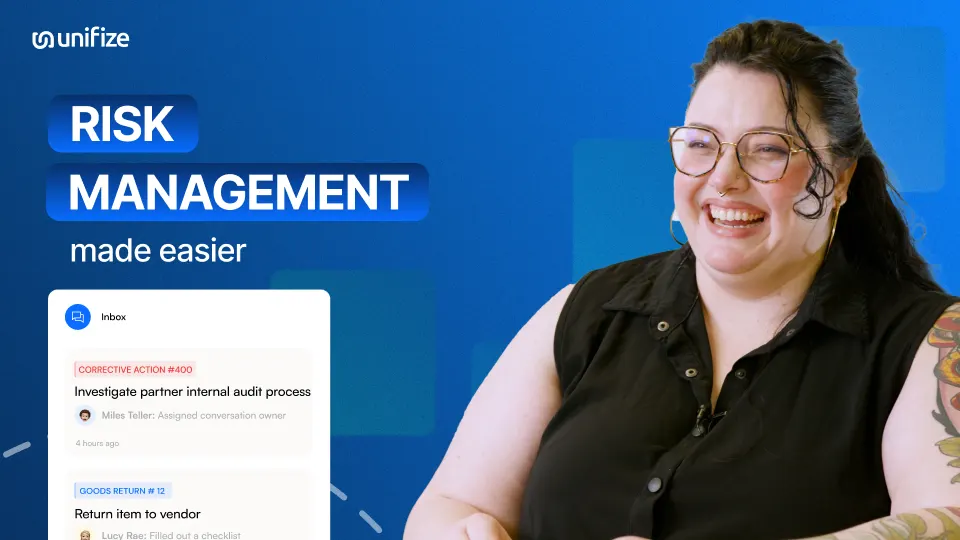 Harmonic BionicsClarissa ArcherUser needs traced to specs and risk controls
 Natalie JonesNutritional SupplementsEvery launch step done A to Z, none falling off
 ApplechemWilson LinIdeation to pre-commercialization about 30% faster
When the launch is at risk.
Each of these starts a clock, and each routes into a governed workflow, so the recovery is decided on the record the auditor will read.
Stage gate recycling
Routes to Design Controls & Traceability · owned by Program Management · Engineering · Quality
Failed design transfer
Routes to Design Controls & Traceability · owned by Engineering · Operations · Quality
Delayed product launch
Routes to Design Controls & Traceability · owned by VP R&D · Product Management

Pass the gate. Keep the history.
Bring one real gate, a recycled review or a transfer that failed acceptance, and see it run on your own work in a 30-minute walkthrough.